
Domenico Ferrari
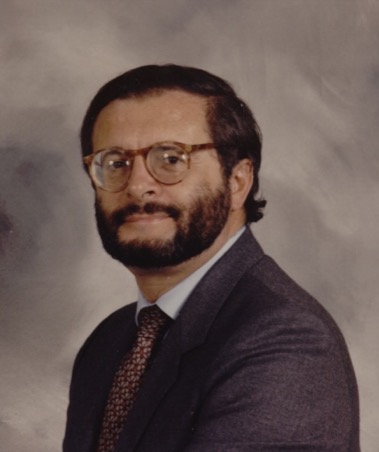
Domenico Ferrari is my academic grandfather. I did not study with him directly, but his work and teaching reached me through my doctoral advisor, Dr. Jehan-François Pâris. He worked on computer systems performance, the development of Berkeley Unix, and quality of service in computer networks.
Ferrari came from Piacenza. He earned his Dottore in Ingegneria Elettronica at the Politecnico di Milano in 1963 under Luigi Dadda, whose mentor was Ercole Bottani. He joined Berkeley's Department of Electrical Engineering and Computer Sciences in 1970 and remained there for twenty-five years.
At Berkeley, Ferrari became a full professor and chaired the Computer Science Division from 1983 to 1987. He also taught at the Politecnico in 1976–77 and retired from Berkeley as Professor Emeritus in 1995.
His early research applied queueing theory and workload characterization to the measurement and modeling of time-sharing systems and virtual memory. His 1978 book, Computer Systems Performance Evaluation, became a standard reference. In a 1984 technical report, he argued that performance evaluation had become too isolated from the rest of computing and should be incorporated into the design of computer architectures and software. He received the A.A. Michelson Award for contributions to computer metrics in 1987, the year he was also named an IEEE Fellow.
In June 1983, Dr. Bob Fabry handed administrative responsibility for Berkeley's Computer Systems Research Group to Ferrari and Dr. Susan Graham, as Dr. Marshall Kirk McKusick recounts in his history of Berkeley Unix. During their tenure, the group released 4.3BSD, refining the TCP/IP implementation and the Berkeley Fast File System introduced in 4.2BSD. BSD provided a common platform for research in networking and distributed systems. Its code contributed to FreeBSD, OpenBSD, NeXTSTEP, and eventually macOS; its socket interface remains familiar to generations of programmers.
In 1989, Ferrari founded the Tenet Group at Berkeley and the International Computer Science Institute. The group investigated how packet-switched networks could provide the timing guarantees needed for real-time audio and video. Its Tenet I and II protocol suites combined scheduling, admission control, and resource reservation to support those guarantees across wide-area networks.
The group's research addressed delay jitter, traffic specification, rate-controlled scheduling, and real-time transport. These ideas contributed to later work on Integrated Services and RSVP. Ferrari directed Tenet until his retirement in 1995.
Ferrari's doctoral students went on to careers in university teaching and industrial research. Dr. Pâris was among them. His mentorship was one of the contributions recognized by the ACM SIGCOMM Award.
After retiring, Ferrari returned to Piacenza and founded the Center for Research on the Applications of Telematics to Organizations and Society at the Università Cattolica del Sacro Cuore. CRATOS applied networking research to telemedicine, government services, and the developing internet economy. In 2000, he was appointed Professore Ordinario per Chiara Fama in computer science and established a master's program in Management in the Network Economy.
Ferrari became an ACM Fellow in 2001. He received the ACM SIGCOMM Award in 2006. The award citation recognized his contributions to Internet quality-of-service architecture and network research testbeds, his leadership at ICSI, his management of the Berkeley Unix project, and his mentorship of researchers.