
Angelo Barbagelata (1875–1960)
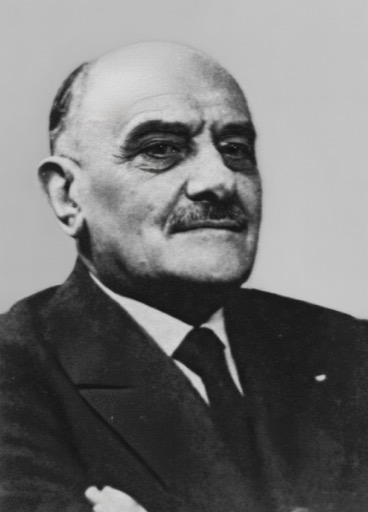
Angelo Barbagelata's career combined electrical measurement, industrial engineering, and university teaching. Among his students at the Politecnico di Milano was Ercole Bottani, through whom Barbagelata enters my academic lineage.
Born in Novi Ligure, in the province of Alessandria, in 1875, Barbagelata earned his laurea in electrical engineering in 1898. He began work at the National Electrotechnical Workshops of Eng. Monti in Pavia and became a volunteer assistant to Prof. Zunini at the IEICE Laboratory in 1899. In 1910, he qualified as libero docente in electrical measurements.
He belonged to the generation of Italian electrical engineers that followed Galileo Ferraris. His principal interests included electric traction and alternating-current measurement, and he designed and tested much of Northern Italy's electrical infrastructure. As technical consultant to Società Breda from 1916 to 1925, he worked on power-station machinery throughout the region.
At the Politecnico, Barbagelata became professor of electrical machines in 1914, extraordinary professor of electrical machine construction in 1923, and ordinary professor of electrical technologies, then electrical systems, in 1926. From 1931 to 1948, he taught electrical measurements and directed the Carlo Erba Institution. He later became Professor Emeritus. He also taught at ITIS Feltrinelli in Milan and directed the Politecnico's Saldini School for Workers.
He published extensively on electrical machines, industrial applications of electricity, and measurement. His books included Macchine elettriche and Metodi fondamentali per le misure elettriche industriali (1930). He was chief editor and later co-director of L'Elettrotecnica.
Barbagelata served as secretary of the Milan section of the Associazione Elettrotecnica Italiana from 1916 to 1918 and as its National Secretary from 1931 until his death. He belonged to the Superior Council of Public Works, the National Council of Research, the Lombard Institute, and the Accademia dei XL. His other appointments included honorary vice president of CIGRE, chairman of the board of the instrument company CGS, and, after the Second World War, president of the Italian Electrotechnical Committee.
He received the Jona Prize in 1922 and the Colombo Prize in 1930. In 1932, the International Congress in Paris commissioned him to prepare its General Report on AC Measurements.
His colleague Prof. Danusso described a scientist “who at every moment hid himself in humility, who cared only about true values, who set things right with upright judgment, respectful to all.” Barbagelata could be reluctant to publish his own work. In 1908, four years after constructing a piece of apparatus, he published its theoretical basis after learning that others were attempting to copy it and deny him credit. In teaching, he believed the university should accommodate the average student and contributed to reforms of university regulations.
Bottani graduated under him with a mark of 110 out of 110, con lode, and later helped establish electronic computing at the Politecnico. Through Bottani, the academic line continues to Luigi Dadda, Domenico Ferrari, Dr. Jehan-François Pâris, and me.
Barbagelata died in Milan on May 23, 1960, aged eighty-four. Adriano Morando's account describes the calendar on his desk at via San Paolo 10, which still recorded his last professional appointment: “13 maggio 1960: perizia.” He had told friends that he was worried about the assignment. Beneath the entry he had written: “The life of each of us is a militia, and moreover a long and varied one. You must observe your duty as a soldier and carry out everything at the commander's signal, if possible divining what he wants.”
Sources: Adriano Morando's illustrated account of Barbagelata, which preserves the anecdotes and Danusso's tribute, and Mario Gliozzi's biographical entry in Treccani.