
On Fathers
I first read this as a teenager, in the late 1970s or early 1980s. Things like it circulated as photocopies then, passed from hand to hand. My copy crossed the counter at the motorcycle shop where I was working. I do not know who wrote it, and I have seen it in several variations since. This is the version I remember.
4 years: My Daddy can do anything!
7 years: My Dad knows a lot…a whole lot.
8 years: My father does not know quite everything.
12 years: Oh well, naturally Father does not know that either.
14 years: Oh, Father? He is hopelessly old-fashioned.
21 years: Oh, that man—he is out of date!
25 years: He knows a little bit about it, but not much.
30 years: I must find out what Dad thinks about it.
35 years: Before we decide, we will get Dad's idea first.
50 years: What would Dad have thought about that?
60 years: My Dad knew literally everything!
65 years: I wish I could talk it over with Dad once more.
The father in this list never changes. He knows the same things at the beginning that he knows at the end. What changes is the child, who first has no basis for comparison, then acquires just enough knowledge to notice the gaps, and then acquires enough to understand how much was there all along.
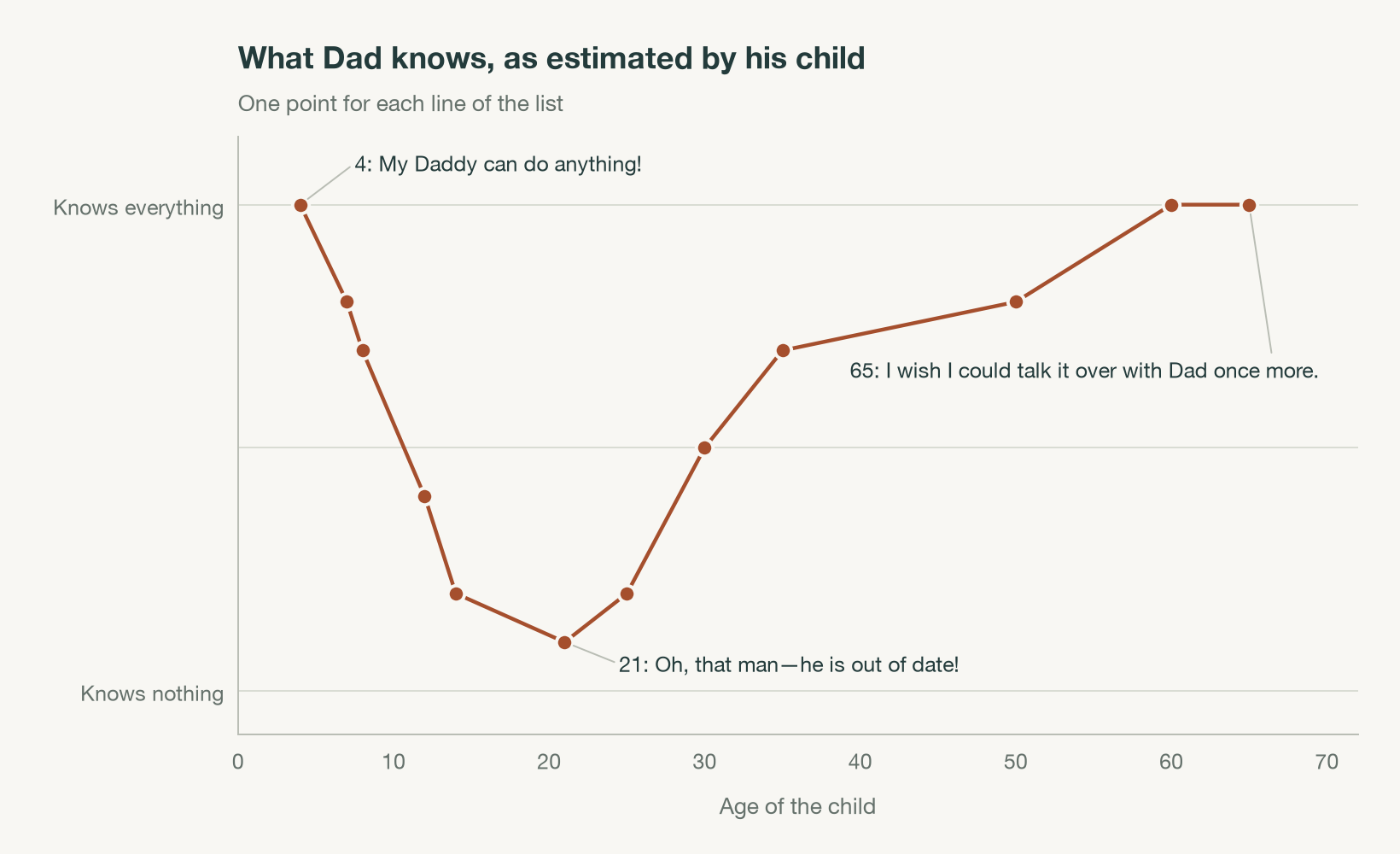
The child's estimate of what Dad knows, by the child's age. One point for each line of the list; where each point sits on the vertical scale is my reading of that line.
The curve has a shape that anyone who has taught will recognize. A little knowledge makes us confident judges of people who know more. It takes a great deal more knowledge to see what they were doing.
When that copy reached me, my mother had recently kicked my father out, for sins real and sins imagined. I was at the age where the list says a father is hopelessly old-fashioned. He loved his children but had a hard time expressing it. I have his heartfelt letters to us, and they prove it.
I have since reached the end of the list, and the last two lines read differently now.
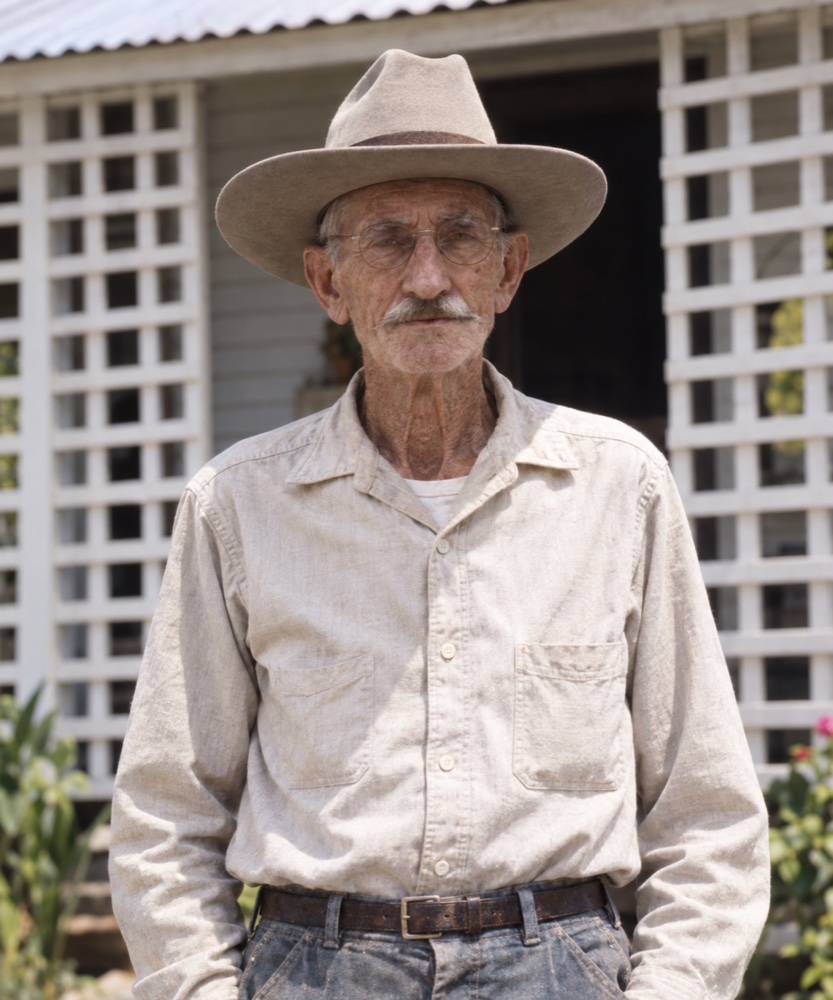
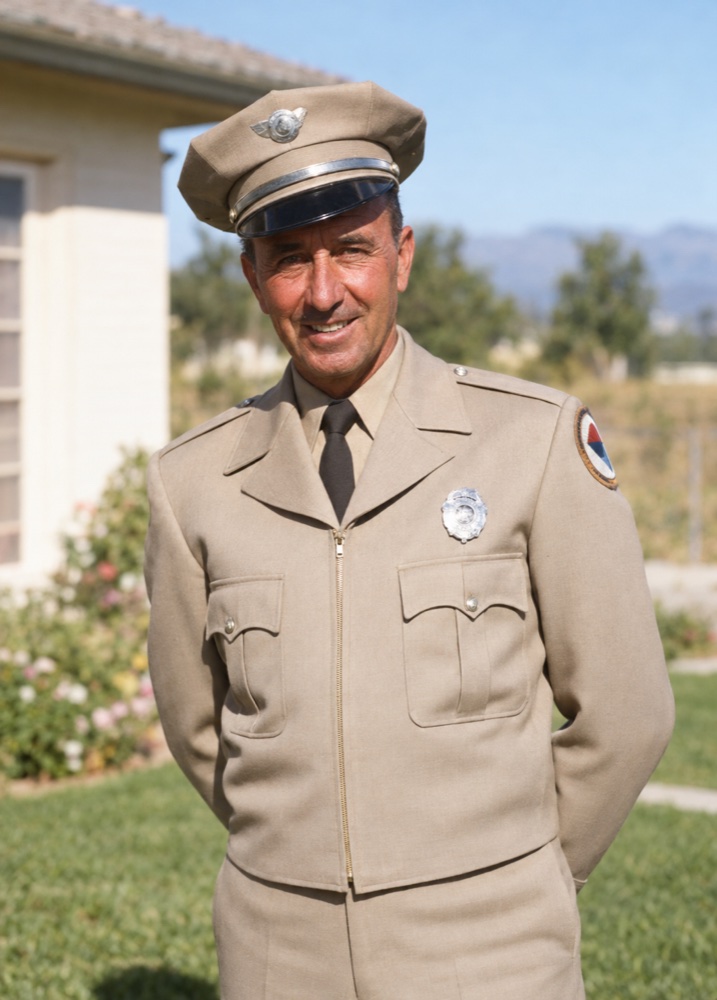
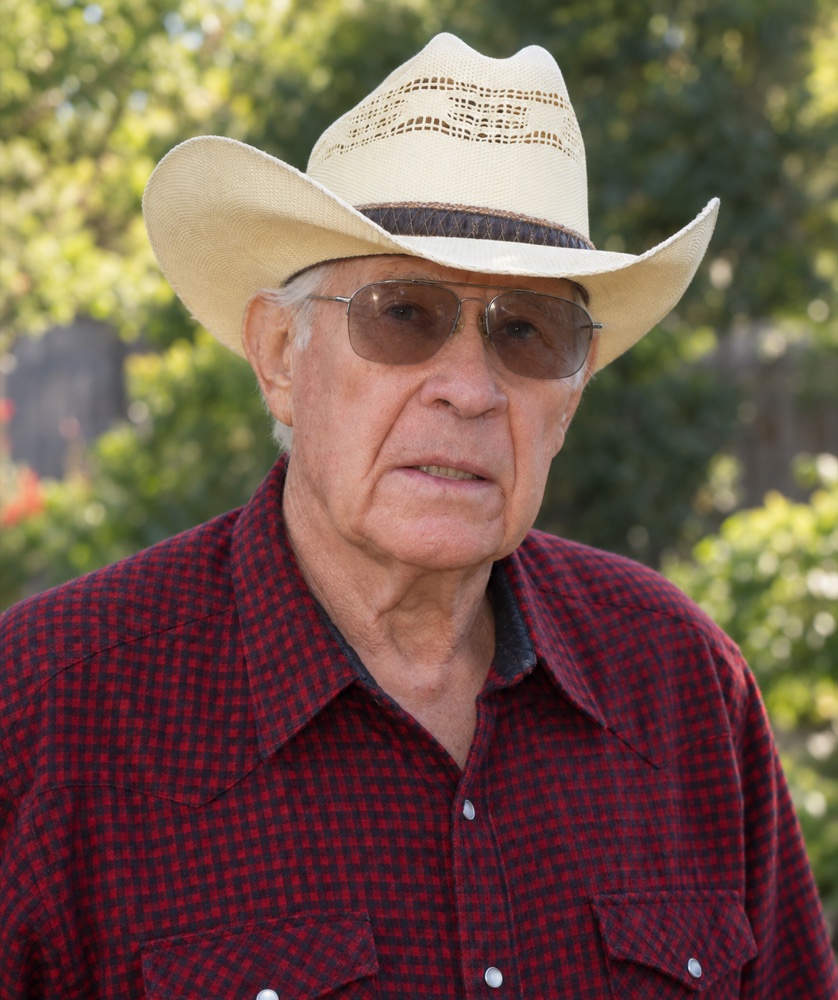
Four generations, from left to right: my great-grandfather, my grandfather, my father, and me.
My great-grandfather, James Edward Long, was a train robber with the James gang. He fled a Texas Ranger across the Red River and settled in Clayton, Oklahoma. His son by Arizona Sparks was my grandfather, Albert Roy Long. Albert served as a military policeman during World War II, then worked security for Convair for thirty years.
Albert's son, Denver Don Long, was my father. He was a mechanic and machinist who worked in the San Diego shipyards during the Vietnam War. I am Denver's son, and I became a professor of engineering at the University of California, Santa Cruz. Four generations took us from train robbery to a university classroom, with military police, aircraft security, and shipyards in between.